.png)

Letter to the Editor: Closing LJHS Pool Would Harm Health, Funding and Local Trust
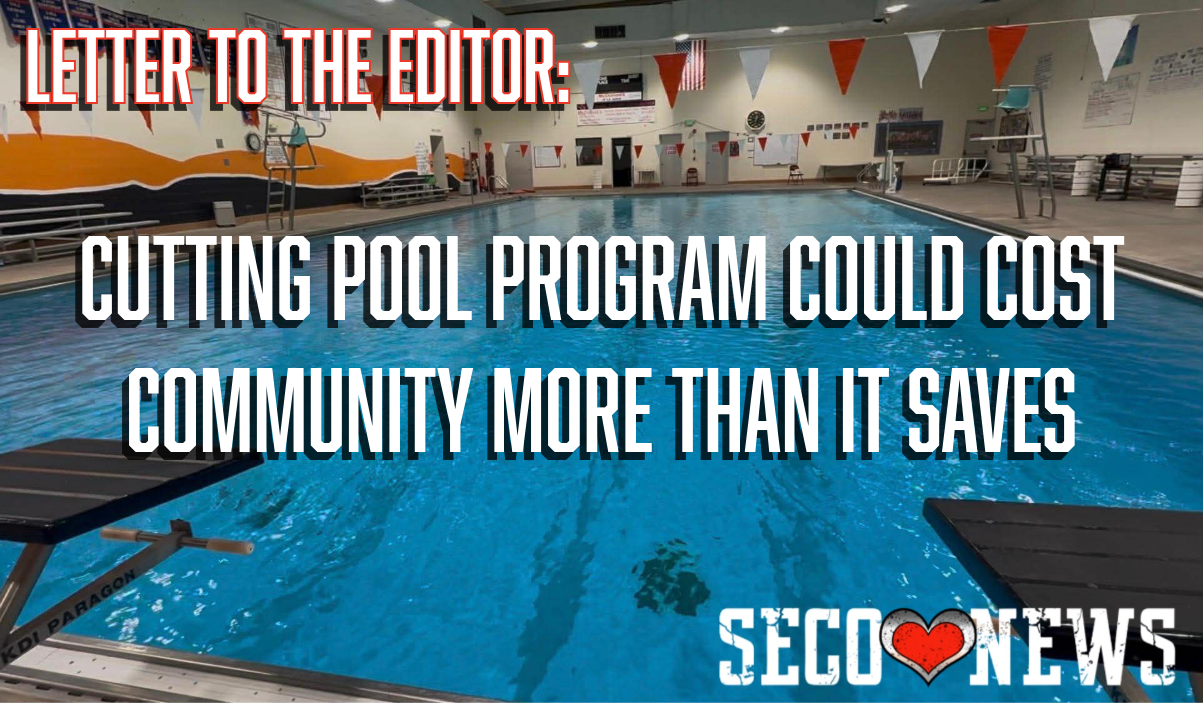
Description: Local resident, Donna Stratford, warns that closing the LJHS indoor pool could harm public health, reduce funding opportunities and weaken community trust, urging leaders to view it as an investment rather than a liability. Opinions Expressed in Letters to the Editor are Not Necessarily those of SECO News, Consulting with A Hart LLC, or Our Advertising Affiliates...
Cutting Pool Program Could Cost Community More Than It Saves
I am writing as someone familiar with budgets and community program development. I have a master’s in organizational management from Regis University. I also regularly utilize the pool to alleviate chronic health conditions in this community where I have found health resources severely limited. I urge you all to look at these resources, such as the pool, as investments and assets rather than liabilities. I understand the desire to “cut costs” during these financially challenging times, so I will try to stick to the financial impacts (even though cutting the pool program will have a myriad of other negative community impacts both to myself and other constituents).
Several factors to consider are, first and foremost rebuilding trust of funding partners such as the state and any others that support the school. Neglect and other forms of mismanagement of resources leading to cuts in programs that serve the community sends the message to funders that investment here is risky. The focus should be on sustainability and positive outcomes not just austerity measures. In other words, more “carrot” than “stick”.
I have an inkling grant funds helped build and maintain that pool. So what message does it send when it closes after long term mismanagement and neglect including deferred maintenance? Also, what grant agreements exist regarding the availability of the pool for community use? Closing it might result in violations of existing agreements (not to mention negating the value of the investments already made).
What about the revenue side of the equation? How can that be improved? Can usage fees be raised? Can the staff be tasked with increasing utilization—such as setting class attendance goals through improved communications? Throughout the recent pool closure, while the communication from staff has been responsive when initiated by me, it hasn’t it been proactive—initiated by THEM. I pay to use the pool and am a customer after all. Why not send a text to everyone at once rather than responding to each inquiry?
What about having more community events at the pool on a REGULAR basis? How about making the hours more consistent (predictable)? I’ve been going for a while and still get confused about the schedule.
There are a number of improvements that might be made to not only help the program break even, but also become a source of revenue. I have offered to help in the past but there didn’t seem to be much interest. And now, because of the extended pool closure, my health has deteriorated to the point I cant help. I literally might have to leave this community because it’s bad for my health and well being. Multiply me by several hundred other users and the impact is much greater than I think some short-sighted folks may appreciate.
I understand the temptation to resolve the budget situation by “doing less”. In my opinion, doing so means neglecting the role the community has entrusted you to do to serve its best interests. This approach is common among certain people in the political class today, but is it really what’s best? My experience says increased effectiveness is better than continued neglect.
Again, thank you for your time and attention to this matter.
Sincerely,
Donna Stratford
Related Video: