.png)

Colorado Parks and Wildlife Unveils Plan to Restore Wolverines to Colorado After 100 Years
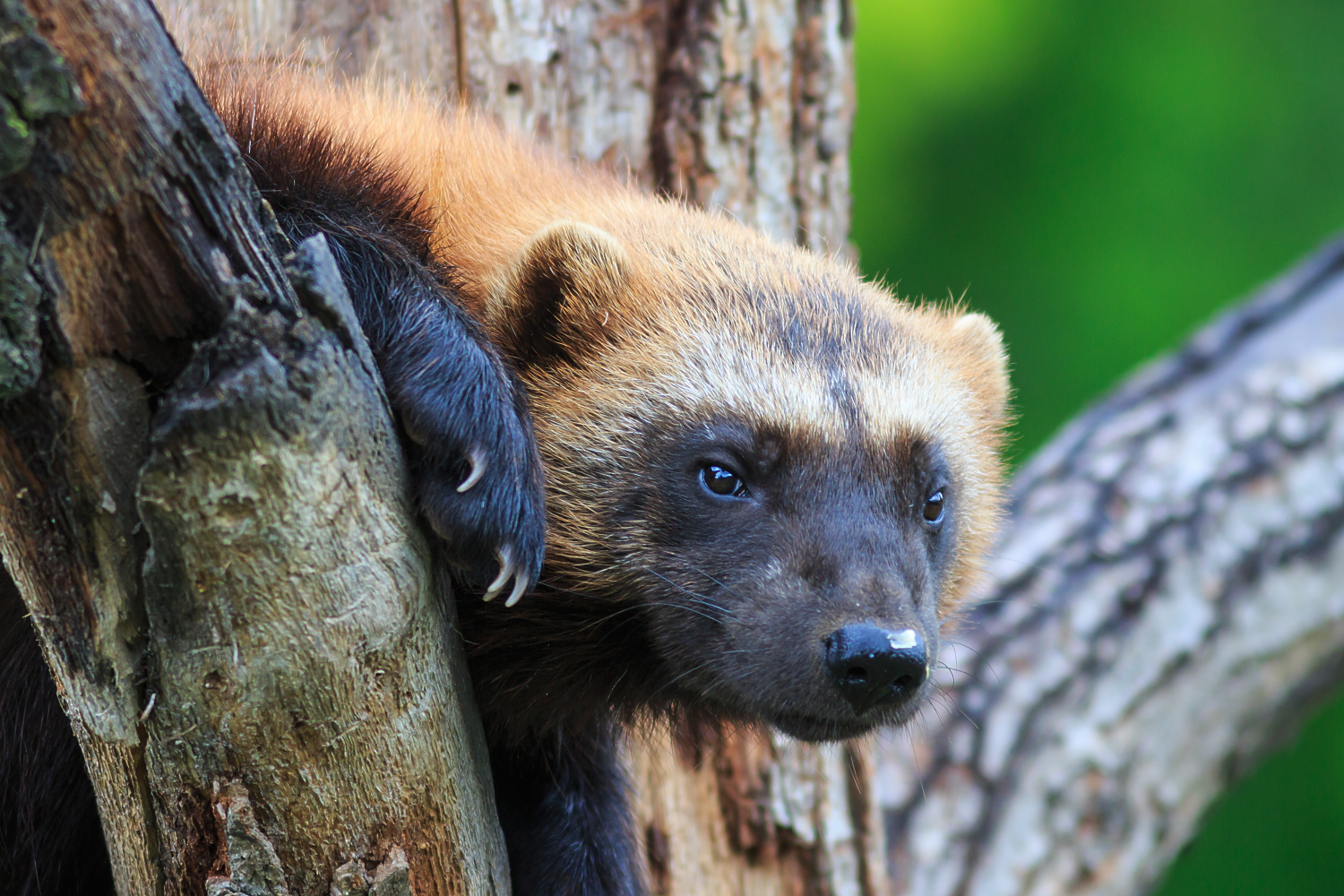
Description: Colorado Parks and Wildlife announced the Colorado Wolverine Restoration Plan, outlining a science-based effort to reintroduce up to 45 wolverines to high-elevation habitats across the state following a century-long absence... Read the Full Press Release from CPW...
Colorado Parks and Wildlife Announces Wolverine Restoration Plan
DENVER – Tomorrow Colorado Parks and Wildlife (CPW) will unveil the Colorado Wolverine Restoration Plan, which will serve as a guide to help restore the species to Colorado after a century-long absence.
How did wolverine restoration come to be?
This effort was authorized by a bipartisan list of supporters in the 2024 Colorado State Legislature through the passage of SB24-171 which called for CPW to restore these 20- to 35-pound weasels that look like small bears with bushy tails and live in alpine areas near treeline.
Senator Perry Will, a Republican former state legislator from a ranching family and a former CPW Area Wildlife Manager, introduced SB24-171. He now serves as a Garfield County Commissioner.
“Colorado has great unoccupied wolverine habitat, and we have the opportunity to conserve a species that has been missing from our state,” said Will. “Our legislation provides Coloradans with the ability to advance conservation while maintaining the management flexibility required to restore this species in a reasonable and efficient manner.”
The Colorado Wolverine Restoration Plan is the first of four pieces to be completed. SB24-171 requires a CPW Commission rule be established regarding compensation for depredation of livestock by wolverines. A proposed rule will also be presented at the January Parks and Wildlife Commission meeting in Denver tomorrow, Thursday, Jan. 15, 2026. Wolverine depredation on livestock is not anticipated to be significant given the history in states where wolverines have lived for the last five decades, their small size, and naturally low densities.
CPW must also establish a communications plan that describes “how the division will communicate to stakeholders and boards of county commissioners in general locations of proposed releases of wolverines.”
The final piece is the designation of Colorado’s wolverine population as a “nonessential experimental population” (NEP) through a federal 10(j) rulemaking prior to initiating the reintroduction process. Wolverines are currently listed as a federally protected threatened species under the Endangered Species Act, and the U.S. Fish and Wildlife Service (USFWS) is in charge of establishing a 10(j) rule.
What’s in the Plan?
CPW’s plan provides a summary of the following:
- wolverine ecology,
- justification for the restoration,
- analyses to determine how many wolverines Colorado might eventually hold and how many individuals should be reintroduced,
- a ranking of potential source areas where wolverines would be obtained,
- and details for how the actual translocations might unfold.
The plan also sets benchmarks for transitioning from the active reintroduction phase to the population expansion phase, and ultimately to the conclusion of the effort and the removal of wolverines from the list of state-endangered species.
CPW has engaged numerous wolverine, wildlife translocation, and veterinary experts to help develop a plan that has the best chance of success. However, there has never been an attempt to reintroduce a population of wolverines and the effort will require attention to detail, the ability to adapt and a commitment to success.
“A planned reintroduction under the management flexibility of a 10(j) rule would bring in about 45 wolverines with a broad genetic background. This will have a far greater chance of establishing a robust long-term population than a single male and female wandering into Colorado, finding each other, and producing enough young to establish a population,” said CPW Wolverine Coordinator Dr. Robert Inman. “Colorado and the wolverine population will be better off with a planned reintroduction.”
The Colorado Wolverine Restoration Plan calls for the translocation of up to 15 wolverines per season for 3+ seasons for a total of 45 translocated individuals. The number of translocations in any year, or overall, will depend on capture success, continued participation by cooperators, and the degree to which relocated animals remain in Colorado and survive. Therefore, annual translocations could vary, and reintroductions could be extended for additional years depending on the outcome of initial efforts.
Translocated wolverines will be released into three release zones in high mountain areas described in the Colorado Wolverine Restoration Plan:
- North of I-70 (which includes Rocky Mountain National Park)
- The central portion of the state (Elk and West Elk Mountains between I-70 and Highway 50
- The San Juan Range in southwest Colorado
Suitable wolverine habitat occurs at about 10,000 feet elevation and above in Colorado. Over 94% of wolverine habitat is on public land, with nearly 70% occurring in federally designated Wilderness, National Park, Wilderness Study Area, or U.S. Forest Service Roadless Area.
How many wolverines can live in Colorado?
CPW believes Colorado can hold about 100 wolverines once the population has been established.
“Wolverines naturally exist at very low densities wherever they are found. Fifty to 100 wolverines may not sound like a lot, but that is likely in the same ballpark as the historical capacity here in Colorado,” Inman said. “It would also represent about a quarter of the population in the Lower 48 states. There never were thousands of wolverines in the Lower 48.”
Restoring wolverines to Colorado is considered a major step toward conserving the species in its native range in the Lower 48.
What’s next?
At the January Parks and Wildlife Commission Meeting, CPW will propose a wolverine depredation compensation rule that mimics the long-established rule governing mountain lion and black bear depredation of livestock. This is the first of a two-step rulemaking process. Based on direction from Parks and Wildlife commissioners informed by public comment, CPW will make revisions to the proposed rule that have been requested by the commission and bring the updated rule back to the commission at a future meeting for final approval.
Based on the naturally low number of wolverines that can fit on the landscape — and a rarity of reports of wolverine depredation in states like Montana and Idaho where wolverines have existed for the last half-century — wolverine damage is not expected to be substantial.
Colorado’s livestock producers are understandably anxious about another carnivore on public lands. However, the utilization of the 10(j) for management flexibility, and CPW's commitment to a fair depredation compensation program will hopefully reduce the impact of wolverine restoration on producers.
CPW will continue to work with the U.S. Fish and Wildlife Service to establish a 10(j) NEP rule. This rule would provide increased management flexibility and relieve regulatory burden on established industries in the state compared to what would otherwise occur if wolverines made it back on their own with full protection under the Endangered Species Act.
“Here in Colorado we have strong legislative support for restoring wolverines and the best staff for making this plan successful, but a 10(j) rule will be crucial to the fulfillment of the effort," said Acting CPW Director Laura Clellan. "We are asking the federal government to support our work by utilizing a focused and concise NEPA process to finalize a 10(j) designation so that the state can move forward. Once this is in place, we will be able to work collaboratively with the U.S. Fish and Wildlife Service in restoring wolverines back to Colorado as well as the future management of this native species.”
The 10(j) was a key component of the legislative process for several stakeholder groups that are most likely to be affected by wolverine restoration.
“Colorado Ski Country USA engaged in the rigorous stakeholding process conducted by CPW for this wolverine reintroduction,” said Melanie Mills, president & CEO of Colorado Ski Country USA. “We support the reintroduction of Wolverine with the 10(j) rule and applaud CPW for its commitment to conservation of this remarkable species and doing so in a way that addresses our industry’s concerns.”
CPW will provide updates on the public scoping/involvement for the NEPA process associated with the 10(j) designation as they become available. Stay connected with updates on this effort on CPW’s website and on seconews.org.